
Data, Trends, and Smart Shopping Insights
Curious how far your budget will go in different parts of the country? This guide to average used car prices by state explains what drives regional price differences, how to compare similar vehicles across markets, and where shoppers often find stronger value. We outline the key factors that move prices in each state, including demand, supply, transportation costs, taxes, and weather. You will also learn how mileage, condition, trim, and title status affect pricing no matter where you shop. Use this page to zero in on realistic price ranges for cars, trucks, and SUVs in your state, see why some states are more affordable than others, and discover research tools to evaluate any listing with confidence. When you are ready to explore vehicles near you or broaden your search radius, the resources and links below help you turn these insights into a smart purchase.
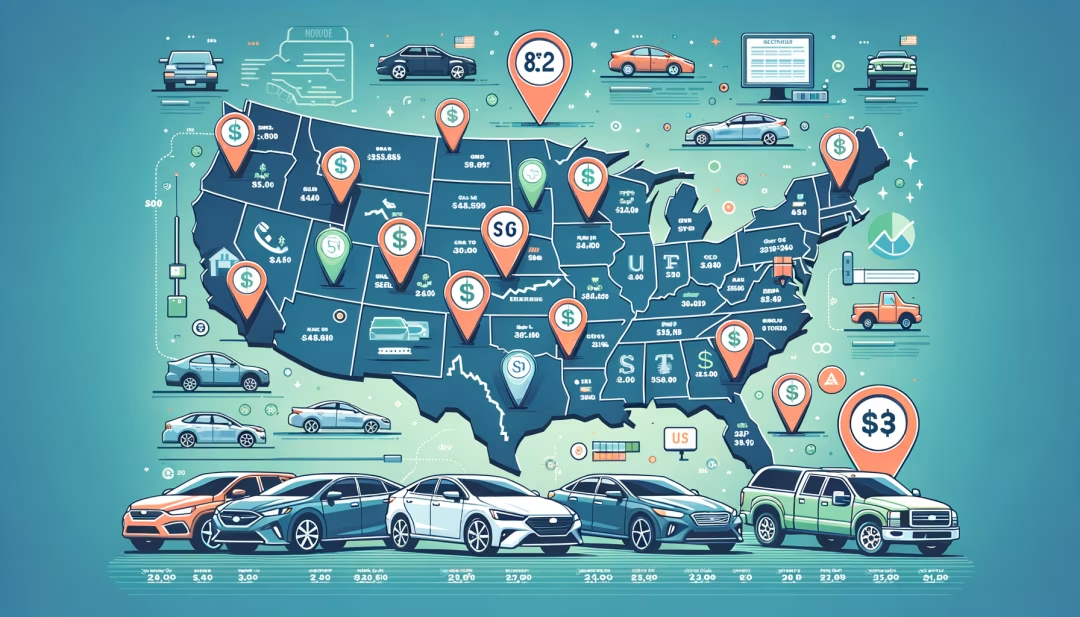
Average used car prices vary widely by state due to taxes, fees, inventory mix, and demand. Coastal metros tend to run higher, while many interior and Southern states trend lower on like for like vehicles. The sections below explain what that means for your budget, how seasonal shifts can move prices, and how to compare offers across state lines so you can recognize a fair deal quickly.
How to interpret average used car prices by state
Averages are a starting point, not a final price. Each state has a unique mix of vehicles by age, mileage, body style, and condition. For example, a state with a heavy share of late model trucks will show higher averages than a state with more compact sedans, even if like for like vehicles cost the same. To use state averages effectively, compare specific vehicles with similar year, trim, mileage, options, and condition. Then layer in your local taxes and fees to see your true out the door difference.
- Match vehicles by year, trim, drivetrain, options, and verified condition.
- Normalize prices by mileage using a per 1,000 mile adjustment for your segment.
- Add estimated taxes, registration, title, and documentation fees for each state.
- Account for shipping or travel if buying from another state.
Why prices differ by state
Used vehicle prices reflect supply and demand. High population density, strong incomes, and tight inventory cause upward pressure, which is common on the West Coast and in the Northeast. States with large wholesale auction activity or lower transportation costs may trend cheaper. Weather also shapes condition and long term durability. Rust belt states can see more underbody corrosion, while Sun Belt states may show stronger paint and interiors but more sun exposure. Insurance costs, emissions rules, and inspection requirements can also influence demand for certain models and powertrains.
- Taxes and fees - Higher sales tax and documentation fees raise the total paid.
- Inventory mix - More trucks and SUVs lift the average price, more compact cars lower it.
- Seasonality - 4x4 SUVs and trucks rise before winter in cold weather states.
- Transportation - Remote markets absorb more shipping costs.
Typical price bands by vehicle type
Exact numbers move with the market, but the relative spread between segments is steady. Compact cars generally carry the lowest purchase price, while late model full size trucks and large SUVs sit at the top. Hybrids and electric vehicles vary by battery health, range, and incentives in your state.
- Compact cars - Often the most affordable path to newer model years at lower miles.
- Midsize sedans - Balanced pricing with wide availability and strong commuter value.
- Small and midsize SUVs - Popular family picks that command steady prices year round.
- Full size SUVs and trucks - Highest resale strength, higher entry price, and strong demand for towing and work.
- Hybrids and EVs - Pricing hinges on battery condition, warranty coverage, and state incentives.
Cheapest and most expensive states to buy used
The least expensive states typically offer a combination of lower sales tax, lower documentation fees, and strong wholesale pipeline access. Many Southern and Midwestern markets fit that profile on average, particularly when you are open to higher mileage vehicles. The most expensive states tend to cluster around high demand coastal metros that bid up popular models. Within any state you can still uncover value by prioritizing condition and comparing multiple local markets. Some shoppers expand their search to a neighboring state with friendlier tax structures, then register at home after confirming the rules for taxes paid.
You can explore real world pricing in the current selection at used-inventory and see recently marketed vehicles in sold-inventory. For a wider view of how the market is moving, review used-car-price-trends and used-car-market-trends.
How to compare offers across state lines
When you find a promising vehicle in another state, build an apples to apples comparison that includes the selling price, your estimated taxes, possible title and registration steps, and transportation or travel. Ask for a full build sheet and inspection results to align features and condition. If emissions or inspections differ by state, confirm any additional steps needed after purchase. Many buyers request a third party inspection before committing to out of state logistics.
- Request a detailed history report and service records.
- Verify title status and lien release before payment planning.
- Estimate shipping and insurance for transport if needed.
- Confirm sales tax credit rules between the seller state and your home state.
For step by step help on vehicle evaluation, see used-car-buying-checklist, what-to-look-for-when-buying-a-used-car, and used-car-inspection-checklist. To assess fairness of a price, review how-to-value-a-used-car and how-to-negotiate-a-used-car-price.
Financing, taxes, and total cost by state
Two identical vehicles can have different total costs due to state specific taxes, registration fees, and interest rate impacts. Even a small rate difference or documentation fee can offset a lower sticker price. When comparing vehicles, compute your complete ownership cost over the first three years, not just the purchase price.
- Create a side by side total for price, taxes, fees, and estimated finance charges.
- Include insurance and expected maintenance by model.
- Confirm how your state handles tax credits when you register an out of state purchase.
For financing education, visit how-does-used-car-financing-work, used-car-loan-interest-rates, how-much-down-payment-for-used-car, and can-you-finance-a-used-car-with-bad-credit. Explore payment options at payment-options and application tools at applications.
Mileage, condition, and climate effects
State climate patterns shape vehicle condition. Dry climates usually reduce corrosion but can age interior plastics and paint. Cold climates may lead to more underbody rust and suspension wear, while mountainous regions can show more brake and transmission load on heavier vehicles. Pricing properly reflects these differences if condition is verified with photos, lift inspections, and records.
- Ask for underbody and wheel well photos to assess rust and leaks.
- Verify tire age, tread depth, and alignment reports in winter states.
- Review battery health on hybrids and EVs, especially in extreme climates.
If you want help narrowing by durability, check most-reliable-used-cars, most-reliable-used-suvs, and most-reliable-used-trucks. Shoppers focused on lifetime value often consult used-cars-with-best-resale-value, used-cars-with-lowest-cost-of-ownership, and used-cars-with-longest-lifespan.
Seasonality and timing by state
Seasonal demand can amplify state differences. In snow belt states, four wheel drive SUVs and trucks tend to appreciate before winter, while convertibles and sports cars see stronger interest in spring. Tax refund season typically boosts demand nationwide. If your target vehicle is seasonal in your state, consider shopping just before demand peaks or expanding your search to a region with the opposite cycle.
To plan your timing, review when-is-the-best-time-to-buy-a-used-car. For bigger picture trends, explore used-car-inventory-trends and why-used-car-prices-are-rising.
Finding value by budget and body style
Budget shoppers can use state averages to decide whether to search locally or cross state lines. If your budget is tight, start with reliable segments known for lower running costs and insurance. Then compare prices in two or three nearby states to find the widest choice of well kept vehicles.
- Bargain picks - best-used-cars-under-10000, most-reliable-used-cars-under-10000, best-used-cars-under-8000.
- Value tiers - best-used-cars-under-15000, best-used-cars-under-20000, best-used-trucks-under-20000.
- Family needs - best-used-family-cars, best-used-3-row-suvs, best-used-minivans.
- Efficiency - used-cars-with-high-mpg, best-used-hybrid-cars, best-used-electric-vehicles.
Methodology snapshot
State level averages are most useful when they control for vehicle mix. A practical approach is to compute median transaction values by body style and model year bands, then apply mileage normalization to improve comparability. Outliers such as salvage titles, extreme mileage, or heavy modifications should be excluded. When you read or create state comparisons, confirm that prices cover retail transactions rather than wholesale auction results, and that fees are treated consistently.
To better understand pricing mechanics, visit how-dealers-price-used-cars, used-car-wholesale-vs-retail-pricing, and how-to-value-a-used-car. If you want to cross check condition and history, see how-to-check-used-car-history and used-car-vin-check-guide.
Trade in and resale considerations by state
Some states allow a sales tax credit on your trade in value. That can tilt the math in favor of buying and trading in state even if an out of state vehicle has a slightly lower sticker. Resale values can also be state sensitive. A truck with proven rust free history may sell faster and for more in northern markets, while an EV with strong range can command a premium in dense metro areas with robust charging.
Estimate your equity at value-my-trade and research future holding costs with used-car-depreciation-guide and used-car-ownership-cost-analysis.
Safety, reliability, and insurance impacts
High safety ratings and strong reliability tend to support pricing in every state, but insurance costs vary by location. A vehicle that is inexpensive to insure in one state may be more costly in another due to accident rates and repair costs. Check model level scores before finalizing your shortlist to avoid surprises in your monthly budget.
- Safety research - used-cars-with-best-safety-ratings, used-cars-with-best-crash-test-ratings, safest-used-cars.
- Reliability picks - most-reliable-used-toyota-models, most-reliable-used-honda-models.
- Insurance awareness - best-used-cars-with-low-insurance-costs.
Plan your next steps
Use this page to understand how your state shapes price and availability, then compare similar vehicles in nearby states to widen your options. Confirm total cost differences with taxes, fees, and financing, and weigh transportation against any price gap. When you are ready to review specific vehicles or get answers to state related questions, see locations, contact-us, and our research hub at research-page-template.
Helpful links
Average Used Car Prices by State - FAQ
Office Hours
Monday
Tuesday
Wednesday
Thursday
Friday
Saturday
9:00 am - 5:00 pm
9:00 am - 5:00 pm
9:00 am - 5:00 pm
9:00 am - 5:00 pm
9:00 am - 5:00 pm
Closed
